Policy Interpretation | Real-Scene Training Special Action Launched: Embodied Intelligence Enters the Stage of "Real Scenes, Real Training, Real Deployment"
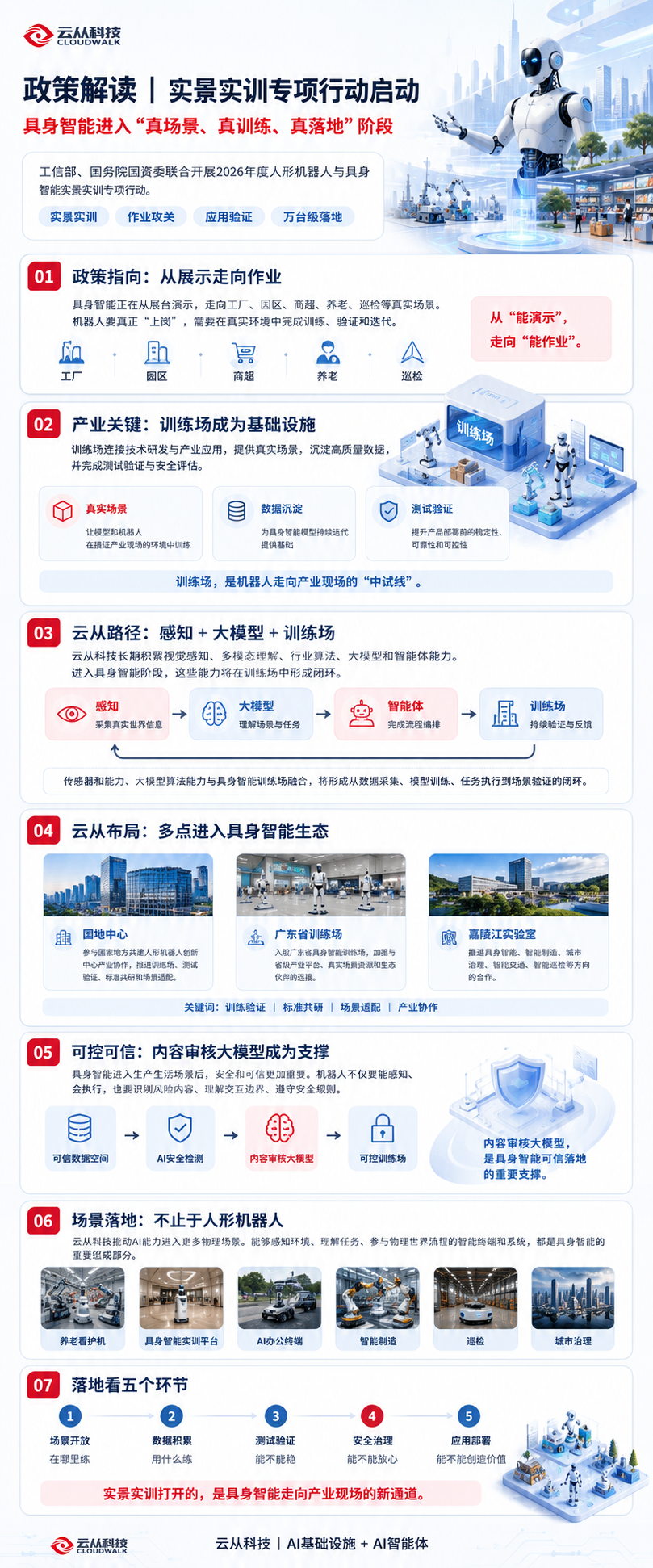
Recently, the Ministry of Industry and Information Technology and the State-owned Assets Supervision and Administration Commission jointly launched2026the annual special action for real-scene training of humanoid robots and embodied intelligence.

According to public information, this special action targets key areas such as industry, special operations, and services, promoting the construction of real-scene training spaces, cultivation of innovation application consortia, skill breakthroughs, and application deployment verification.
0 to2026By the end of the year, key products such as humanoid robots will complete application verification and routine deployment in a batch of representative scenarios, initiating"operation modes", consolidating over a hundred high-value application scenarios, further enriching the application spectrum of embodied intelligence, and driving the formation of a deployment capability at the ten-thousand-unit scale.
This means that the development of embodied intelligence is entering a new phase.
01
From Prototype Demonstration to Real-World Operations
In the past period, the buzz around embodied intelligence has been more focused on model capabilities, robot hardware, and live demonstrations.
This special action shifts the focus to"real-scene training", taking a more pragmatic direction: letting robots enter real production and living environments to train, verify, and iterate on specific tasks.
Scenarios such as factories, parks, supermarkets, elderly care, inspection, and emergency response are not simple experimental environments. Real scenes involve complex lighting, dynamic crowds, noise interference, spatial changes, as well as requirements for safety, stability, and continuous operation.
For robots to truly"go to work", they must undergo extensive training in real-world scenarios.
This is the value of real-scene training.
A key step for embodied intelligence is moving from"being able to demonstrate"to"Capable of Operation".
02
Training Grounds Become a Key Link in Industrial Deployment
The development of embodied intelligence relies on models, data, computing power, and hardware, as well as training, evaluation, and safety verification.
For robots to understand environments, complete tasks, and adapt to changes, they need continuous accumulation of real data; for products to enter industry sites, they need repeated testing in complex environments; for applications to scale, unified scenario standards and verification systems are required.
Therefore, training grounds are not just exhibition spaces, but a crucial intermediate link connecting technology R&D and industrial application.
It serves three functions:
First, providing real-world scenarios for models and robots to train in environments close to industrial sites;
Second, accumulating high-quality data to support the iteration of embodied intelligence models;
Third, conducting testing and verification to improve the safety, stability, and controllability of products before deployment.
Since this year, the standard system for embodied intelligence has been accelerating. The "Standard System for Humanoid Robots and Embodied Intelligence (2026Version)" has covered the entire industry chain, including basic commonality, brain-like and intelligent computing, limbs and components, complete machines and systems, applications, and safety.
The continuous advancement of policies and standards indicates that the industry is moving from a technology boom to systematic construction.
03
CloudWalk Technology's Accumulation Is Creating a Chemical Reaction with Embodied Intelligence Training Grounds
For CloudWalk Technology, the direction pointed by the Real-Scene Practical Training Special Action is highly aligned with the company's strategy promoted in recent years."AI"AI infrastructure+AIWith the popularization of the internet and the application of artificial intelligence, more and more questions can be quickly answered. So, will our questions become fewer?"Strategic alignment.
CloudWalk Technology has been deeply engaged in artificial intelligence for over a decade, accumulating technical expertise from visual perception, multimodal understanding, industry algorithms to large models and intelligent agents. The early perception capabilities enableAIit to"see"in complex scenarios; multimodal large models and industry algorithms allowAIit to further possess understanding, reasoning, and judgment capabilities; the agent system enablesAIit to execute processes and collaborate around specific tasks.
Entering the embodied intelligence stage, these capabilities need to be repeatedly trained and verified in real-world scenarios.
The value of training grounds lies precisely in connecting perception, cognition, decision-making, and execution in real environments, moving model capabilities from"understanding on the screen"to"action in the physical world.".
In this direction, CloudWalk Technology continues to advance capabilities such as the CongRong multimodal large model, training and inference platform, trusted data space, Human-Machine Collaborative Operating System (CWOS), and industry agents.
At the Wuhan National Network Security Base, CloudWalk Technology, together with relevant parties, is building a controlled training ground to promote the coordinated deployment of training and inference platforms, trusted data spaces,AIsecurity detection, content review large models, and other capabilities, providing training, verification, and safe operation support for large models, agents, and embodied intelligence applications.
When traditional perception capabilities, large model algorithm capabilities, and embodied intelligence training grounds are combined, a new closed loop is formed:
Perception capabilities collect real-world information, large models understand scenes and tasks, agents complete process orchestration, and training grounds provide continuous verification and data feedback.
This closed loop is precisely the capability most needed to bridge the gap from R&D verification to industrial application for embodied intelligence.
04
Content Moderation Large Model Supports Controllable and Trustworthy Embodied Intelligence
Once embodied intelligence enters real-life scenarios, safety requirements will further increase.
Robots and intelligent terminals must not only"see, hear, and execute", but also identify risky content, understand interaction boundaries, comply with safety rules, and remain controllable and trustworthy in complex environments.
Voice interactions between humans and robots, as well as terminals' understanding and response to images, text, and instructions, may involve content safety, privacy protection, behavioral boundaries, and risk management.
Future embodied intelligence products must possess not only execution capabilities but also judgment and constraint capabilities.
The content moderation large model co-developed by CloudWalk Technology is a key foundational capability for this trend.
Together withAIsafety detection, trusted data space, controllable training grounds, and other capabilities, it provides measurable, manageable, and traceable support for embodied intelligence from R&D verification to real-world application.
From an industry perspective, the closer embodied intelligence gets to homes, elderly care, supermarkets, parks, and public service scenarios, the more important trustworthy governance becomes.
Only by advancing model training, content safety, data governance, and application deployment within the same framework can embodied intelligence more steadily enter production and daily life scenarios.
05
From training and validation to scenario application
CloudWalk Technology is also continuously participating in the construction of the embodied intelligence industry ecosystem.
The company is deeply involved in industry collaboration at the National and Local Joint Humanoid Robot Innovation Center, focusing on training grounds, testing and validation, standard co-development, and scenario adaptation.
Meanwhile, CloudWalk Technology is advancing technical cooperation with research platforms such as Jialing River Laboratory in areas including embodied intelligence, smart manufacturing, urban governance, intelligent transportation, and intelligent inspection, driving capabilities from R&D validation to scenario application.
At the specific application level, CloudWalk Technology is also promotingAIcapabilities into more terminals and livelihood scenarios.
Elderly care robots, embodied intelligence training platforms,AIoffice terminals and other applications reflect the trend of embodied intelligence extending from robot bodies to smart hardware, education and training, home care, and office collaboration.
Embodied intelligence is not limited to humanoid robots.
Smart terminals and systems that can perceive the environment, understand tasks, and participate in physical world processes are all important components of this round of industrial evolution.
06
The closed loop of scenario, data, safety, and algorithm will determine the speed of deployment.
From an industry perspective, the large-scale deployment of embodied intelligence typically goes through several stages:
Scenario opening, addressing""where to train"";
Data accumulation, addressing""what to train with"";
Testing and validation, addressing""whether it can run stably"";
Safety governance, addressing""whether it can be used with confidence"";
Application deployment, addressing""whether it can continuously create value"".
This real-scenario training special action is precisely centered around these key links.
As policies, standards, scenarios, and industrial resources accelerate convergence, embodied intelligence is moving from technological exploration to large-scale application. In the future, whoever can connect perception capabilities, large model algorithms, training and validation, safety governance, and scenario applications will have a better chance of bringing embodied intelligence into industrial sites.
CloudWalk Technology stated that it will continue to deepen investment inAIinfrastructure, controlled training grounds, content safety, agent R&D, training and validation, and scenario application, actively participate in the construction of the embodied intelligence industry ecosystem, and promote moreAIcapabilities to be validated in real scenarios, form products, and serve the industry.
What real-scenario training opens is a new channel for embodied intelligence to enter industrial sites.
You May Be Interested In
-
 2026-01-26
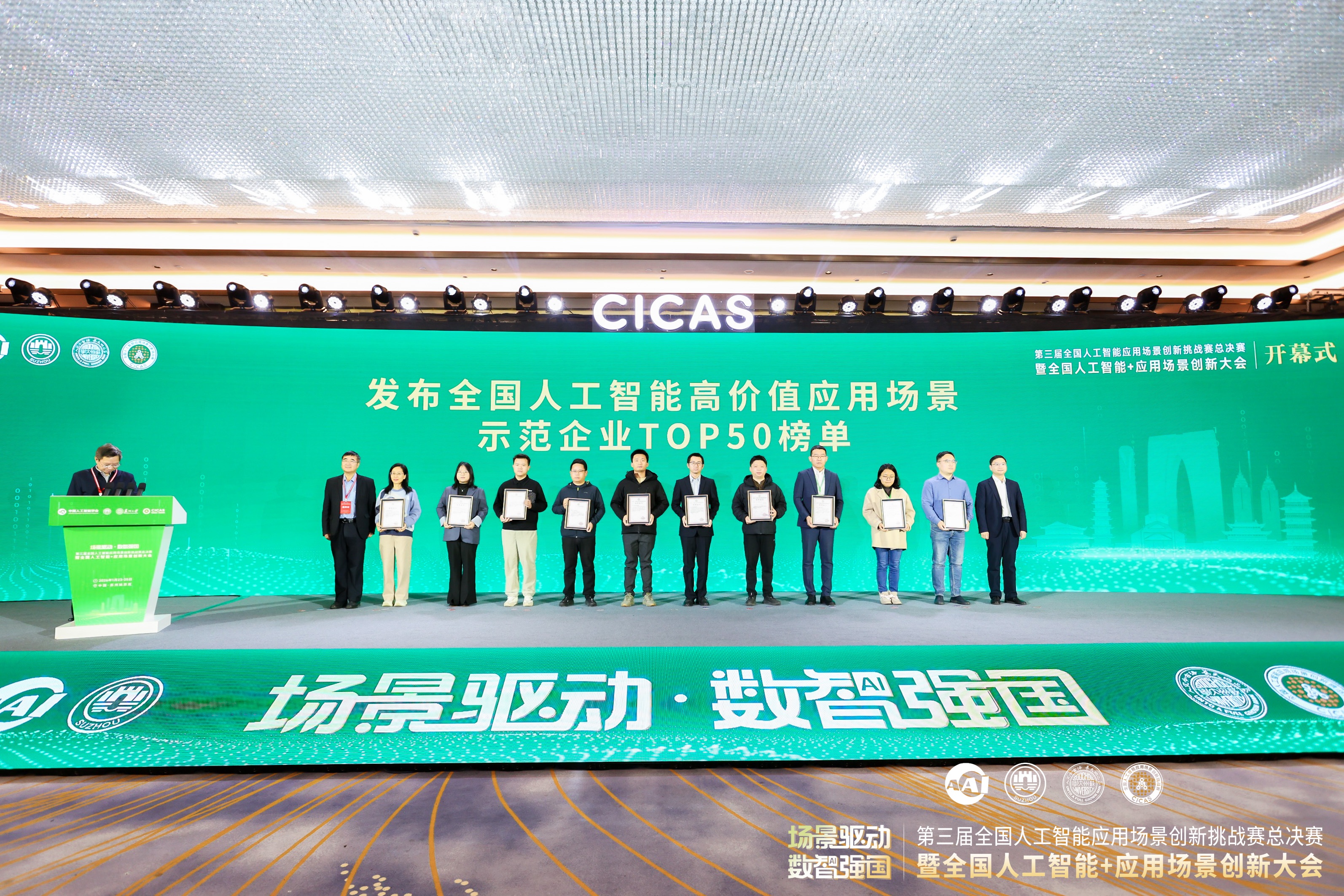
Recently, CloudWalk Technology was selected for the National Top 50 AI High-Value Application Scenario Demonstration Enterprises list. The selection was based on the National AI Application Scenario Innovation Challenge (CICAS). CICAS is jointly hosted by the Chinese Association for Artificial Intelligence and the New Generation AI Development Research Center of the Ministry of Science and Technology. It is a national-level competition focusing on the application capabilities and industrial value transformation of AI in real complex scenarios, and is regarded as an important platform for observing China's AI transition from technological breakthroughs to large-scale applications.
-
 2024-08-08
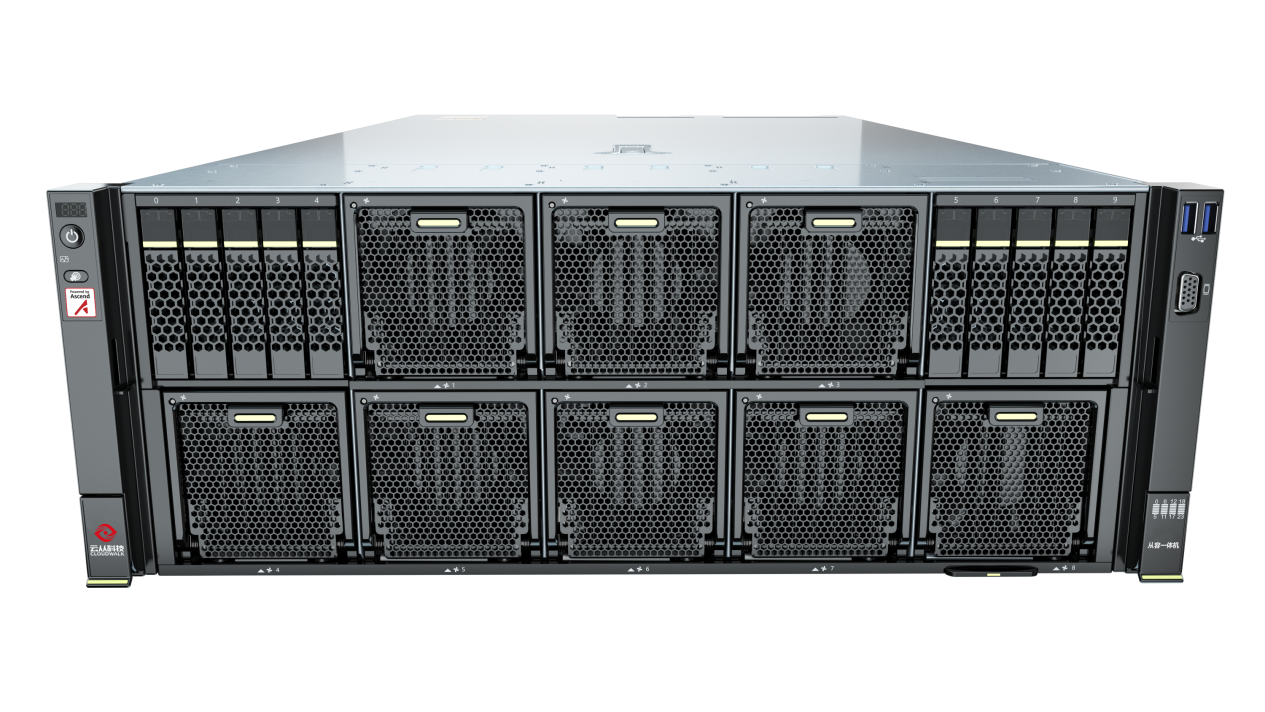
Recently, the Chongqing Economic and Information Technology Commission announced the first batch of municipal-level first-edition software products list for this year. CloudWalk Technology's CongRong Large Model Training and Inference Appliance System stood out for its excellent compatibility and technological innovation, successfully being selected.
-
 2025-02-27
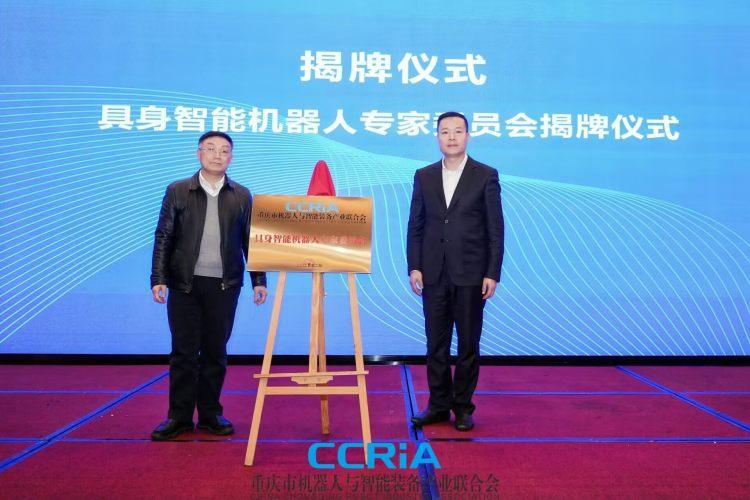
On February 26, at the "2025 Embodied Intelligent Robot Technology Industry Finance Conference and Chongqing Robot and Intelligent Equipment Industry Association" held in Chongqing, the Chongqing Embodied Intelligent Robot Expert Committee was officially established. CloudWalk Technology, leveraging its core technological advantages in the AI agent field, was officially appointed as a member unit of the committee. This appointment marks CloudWalk Technology's deep involvement in the top-level design and technological breakthrough of Chongqing's embodied intelligent robot industry, helping to build an internationally competitive intelligent equipment industry cluster.